
Finding Residents Across Normal Records
There is no official master roll of everyone who lives in Normal. Public sources list people only when an event or duty puts a name in a record. The property roll identifies the assessed owner. A deed index identifies parties to a recorded transfer or lien. Court indexes identify parties in filed cases, while the state voter tool confirms only the person who supplies the required matching details. Historical directories and newspapers cover different years and may include renters whom land records miss.
Choose the first source from the kind of fact already in hand. A street address points toward the parcel roll. A full name and birth date may fit the voter or court search. An old name or address belongs in a directory, newspaper, probate index, or archive catalog. Then compare the result against another record before treating it as current.
- Search the McLean County property roll by an owner name or street address.
- Use the Illinois voter tool only when the name, birth date, ZIP, and street details are known.
- Check deeds, court indexes, licenses, or business filings for an independent match.
- Move older questions to city directories, newspapers, probate, and IRAD holdings.
- Ask the named custodian for records that are not available online.
Normal Resident Records Custodians
Normal is not the McLean County seat, so many useful resident records are kept at county offices in Bloomington. The Town Clerk handles Normal municipal records and Freedom of Information Act requests. The McLean County Clerk now holds elections, vital records, assumed names, and the Recording Division. The Supervisor of Assessments and County Treasurer support the parcel and tax systems. The Circuit Clerk keeps the official court files behind the public case indexes.
McLean Recording Division
115 E. Washington Street, Room M104
Bloomington, IL 61701
309-888-5170
McLean Property Records
115 E. Washington Street
Bloomington, IL 61701
309-888-5130
McLean County Clerk
115 E. Washington Street, Room 102
Bloomington, IL 61701
309-888-5190
The Normal street directory gives the full address-led route through the assessor, GIS, and deed systems. Office staff can also explain whether a needed record is online, at a public counter, on microfilm, or available by written request.
Normal Parcel Clues in Devnet
McLean Property Tax Inquiry is the strongest first stop for a current Normal address. It accepts an owner name, house number or range, street, city, parcel number, sale details, tax codes, districts, property class, and legal description. A separate tab covers mobile homes. Results may show the parcel identification number, situs address, owner mailing address, legal description, assessed values, exemptions, tax bodies, payments, and sale history.
- Situs address
- The physical location of the parcel.
- Mailing address
- Where the tax bill goes, which may be somewhere else.
- Parcel number
- The county identifier used to connect tax, GIS, and deed records.
- Legal description
- The plat-based description used in land records.
An owner name is not proof that the owner lives there. The mailing address can differ from the situs address, and an exemption is only a clue. Use the parcel number to compare the map and deed index.
Normal GIS Joins Parcel Records
The Town of Normal parcel layer supplies map geometry along with address, owner, parcel number, and direct links to assessor, recorder, and tax information. That makes the layer useful when a street spelling is uncertain or when nearby parcels must be distinguished. The county McGIS hub adds other maps and open-data resources.
Search results from the Town layer have a 2,000-record limit, so a focused address or parcel query works better than a broad townwide pull. Map boundaries show land units, not households. Condominiums, shared mailing addresses, vacant land, and multi-unit buildings need added care.
Once a parcel number is known, the same identifier can narrow the tax and land-record searches. The map is the bridge, while the linked county record remains the evidence.
Normal Deeds Are Changing Portals
McLean County recording duties moved from the Recorder to the County Clerk after a 2012 referendum, effective December 31, 2013. Older references may still say Recorder, but current requests go through the Clerk's Recording Division. The index uses grantor for a person giving an interest and grantee for a person receiving one. Search both roles to follow ownership or a recorded lien over time.
The county began shifting from its Cott eSearch system to RecordHub in August 2026 while historical books, indexes, and images were loading. The official records page reported indexed official records from January 1, 1973 through its certified cutoff, with UCC coverage beginning in 1992. Earlier documents remain in the division's holdings back to 1831. Online access can require account registration, while the counter, phone, and mail routes remain useful for older books or copies.
The RecordHub landing page was captured during that transition.
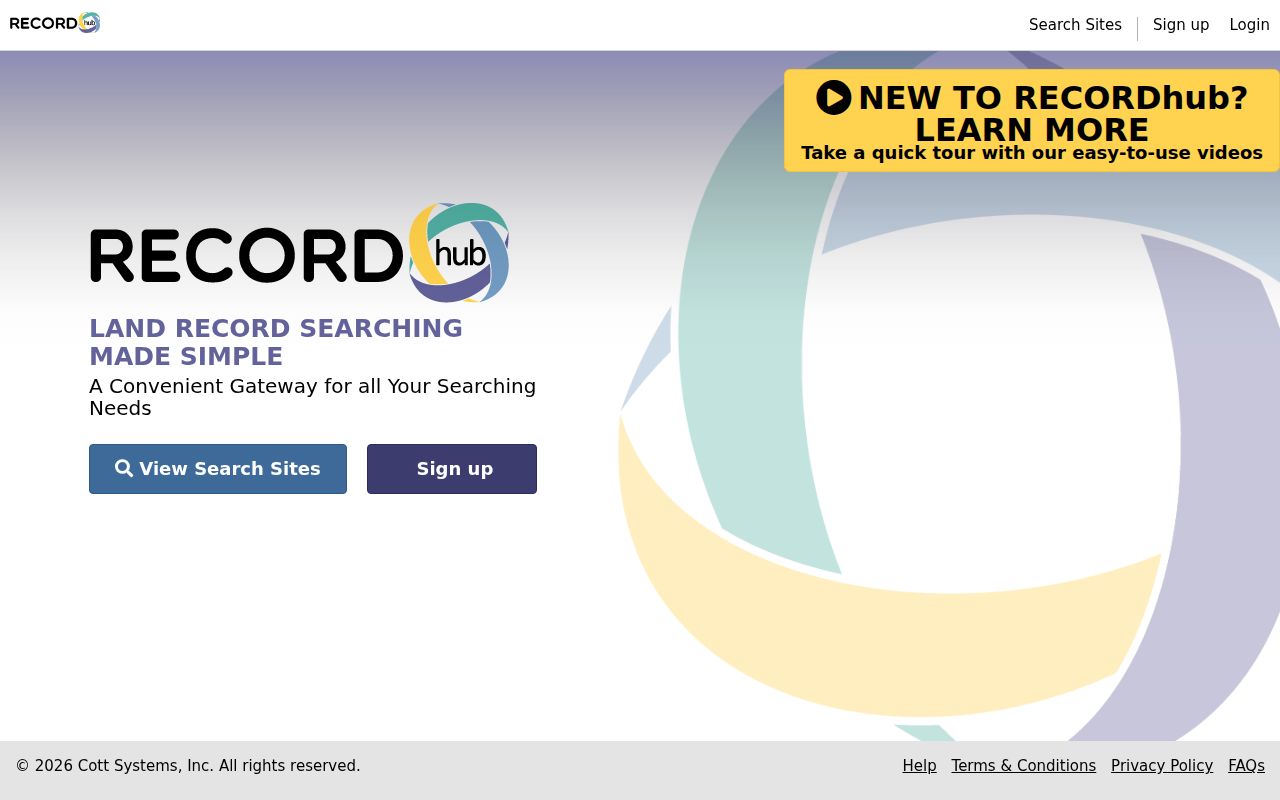
Because the migration is active, recheck the live certified-date page before relying on the newest indexed date.
Normal Court Names Need Two Searches
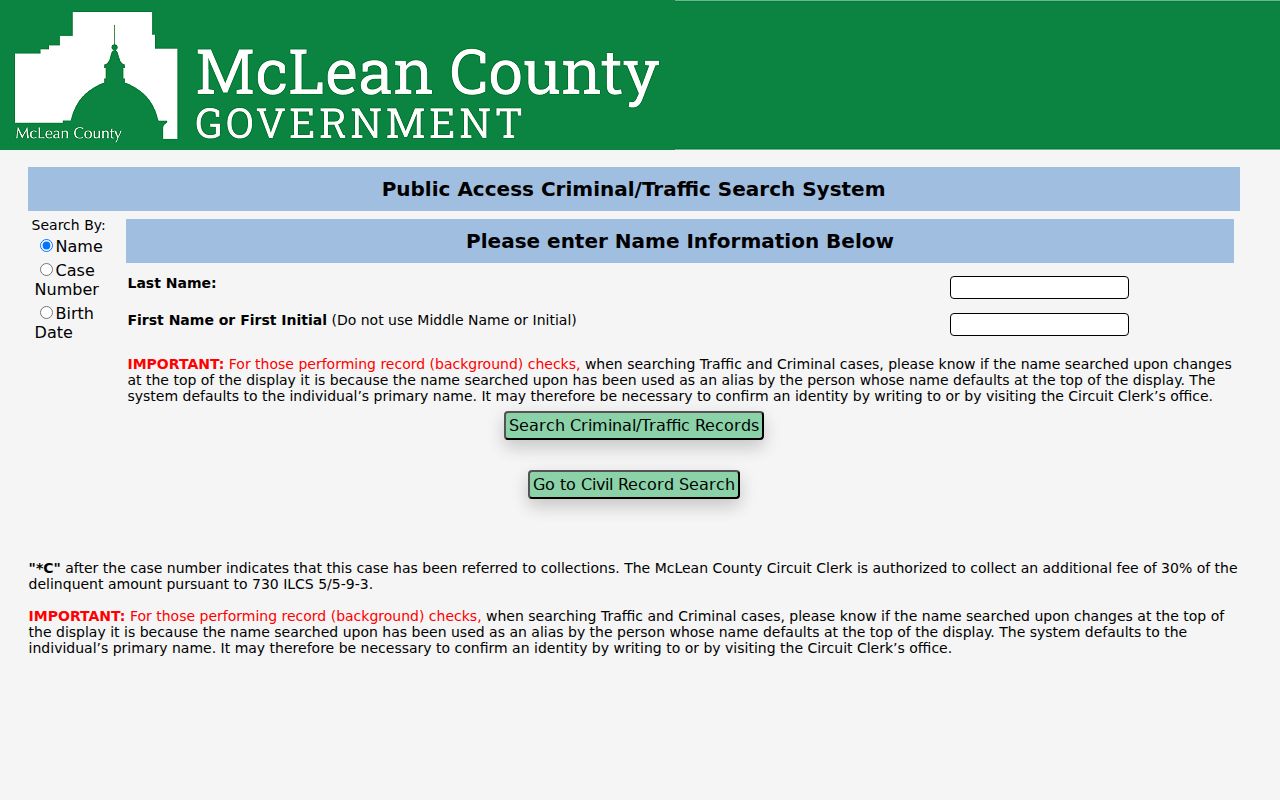
McLean County separates its public case lookup into criminal and traffic records from 1991 forward and civil records from 2008 forward. Search the criminal and traffic index by name, case number, or birth date. The civil index accepts a person, business, or case number. A blank result in one screen says nothing about the other.
| Index | Online span | Search choices | Best confirmation |
|---|---|---|---|
| Criminal and traffic | 1991 to present | Name, case number, birth date | Circuit Clerk file |
| Civil | 2008 to present | Person, business, case number | Circuit Clerk file |
| Federal | Varies by court | Party or case through PACER | Federal court docket |
Middle names may be missing, aliases can create duplicates, and the web row is not the official case file. Verify a case number and disposition with the Circuit Clerk. Federal matters use PACER.
The criminal and traffic screen shows its name and date fields.
The separate civil search capture makes the split clear.
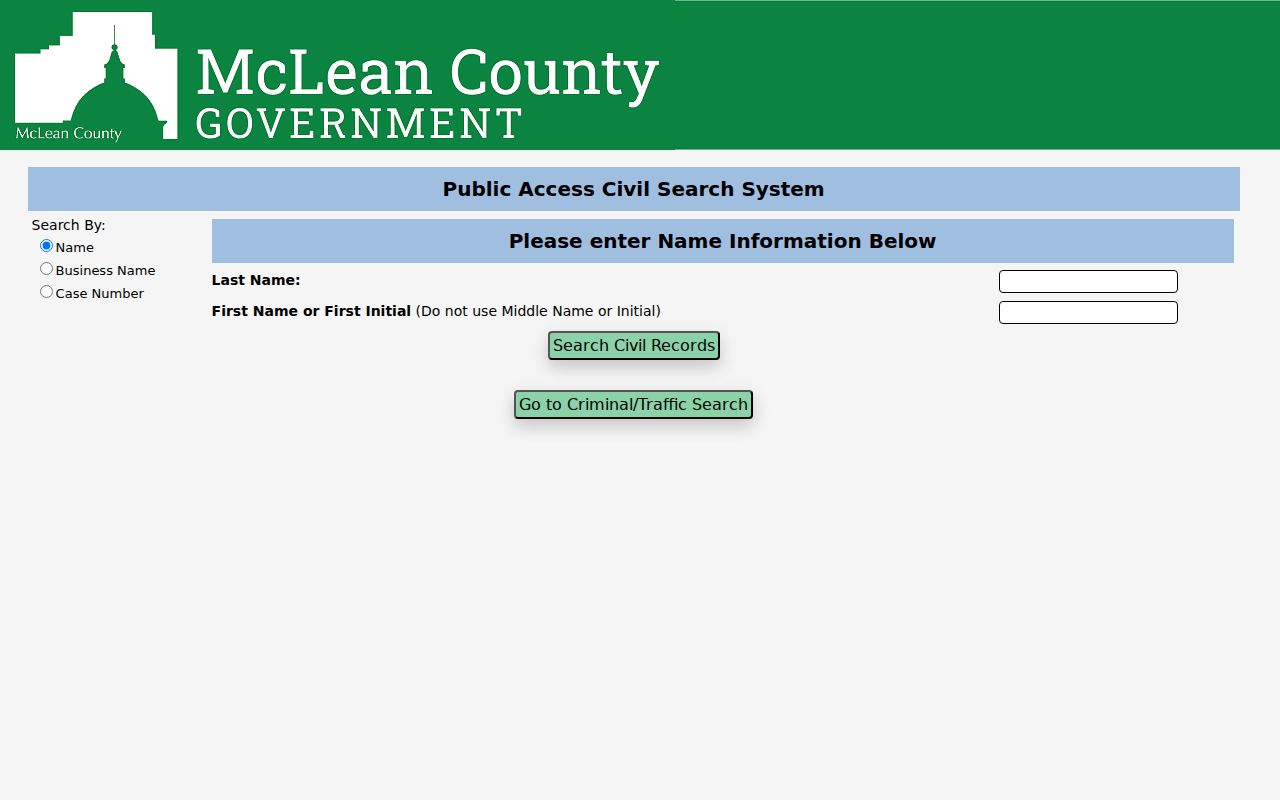
Run both local screens before concluding that no indexed McLean case exists.
Normal Voter Lookup Boundaries
The Illinois voter registration lookup asks for a name, birth date, ZIP, and then street details. A match can return registration status, address, precinct, polling place, and districts. It is a self-verification tool, not an open statewide name directory. Illinois Election Code 10 ILCS 5/1A-25 limits disclosure and use of voter-file data.
Normal falls under the McLean County Clerk's election authority. Bloomington maintains a separate election commission, even though both places share the county and some postal patterns. A person tied to a Bloomington address may therefore need a different election office. The County Clerk also provides voting and walking lists only to eligible requester categories under the documented form and fee rules.
Current Normal Resident Record Rolls
Each current source covers a defined group. The property roll is broad for owners but weak for occupants. The voter tool confirms a supplied identity rather than letting the public browse a household. Recorded documents and court cases show participation in an event, not current residence. The Town staff directory lists public employees by department, first name, or last name, but it is not a list of all residents.
| Normal-area source | People represented | What it can support | Access route |
|---|---|---|---|
| Property Tax Inquiry | Assessed owners | Owner, parcel, situs and mailing clues | Free web portal |
| Illinois voter lookup | Matching registered voter | Status, precinct, polling place, districts | Restricted field match |
| Recording index | Document parties | Deeds, liens, dates and references | Account, counter, phone or mail |
| Town staff directory | Normal public staff | Department and work contact | Free directory |
| Court indexes | Named case parties | Case number and index details | Two free local screens |
For one-person work, the Normal resident lookup keeps the name-led checks in a single order. Never treat a single record as a complete household list.
Normal Vital Records Have Gates
The McLean County Clerk application process covers birth, death, marriage, and civil-union certificates for events in McLean County. Requests may be made through the documented online identification route, in person, or by mail with the required identity and eligibility proof. Statewide copies and guidance come from the Illinois Department of Public Health.
Birth and death certificates are restricted. Under 410 ILCS 535/24, original birth records at least 100 years old and death records at least 50 years old can move into archival and approved-library access. McLean marriage licenses begin in 1831, with the front-copy and later front-and-back rules described by the Clerk. For family history, use the archive threshold instead of trying to bypass current-certificate eligibility.
The county application page shows the available request channels and proof requirements.
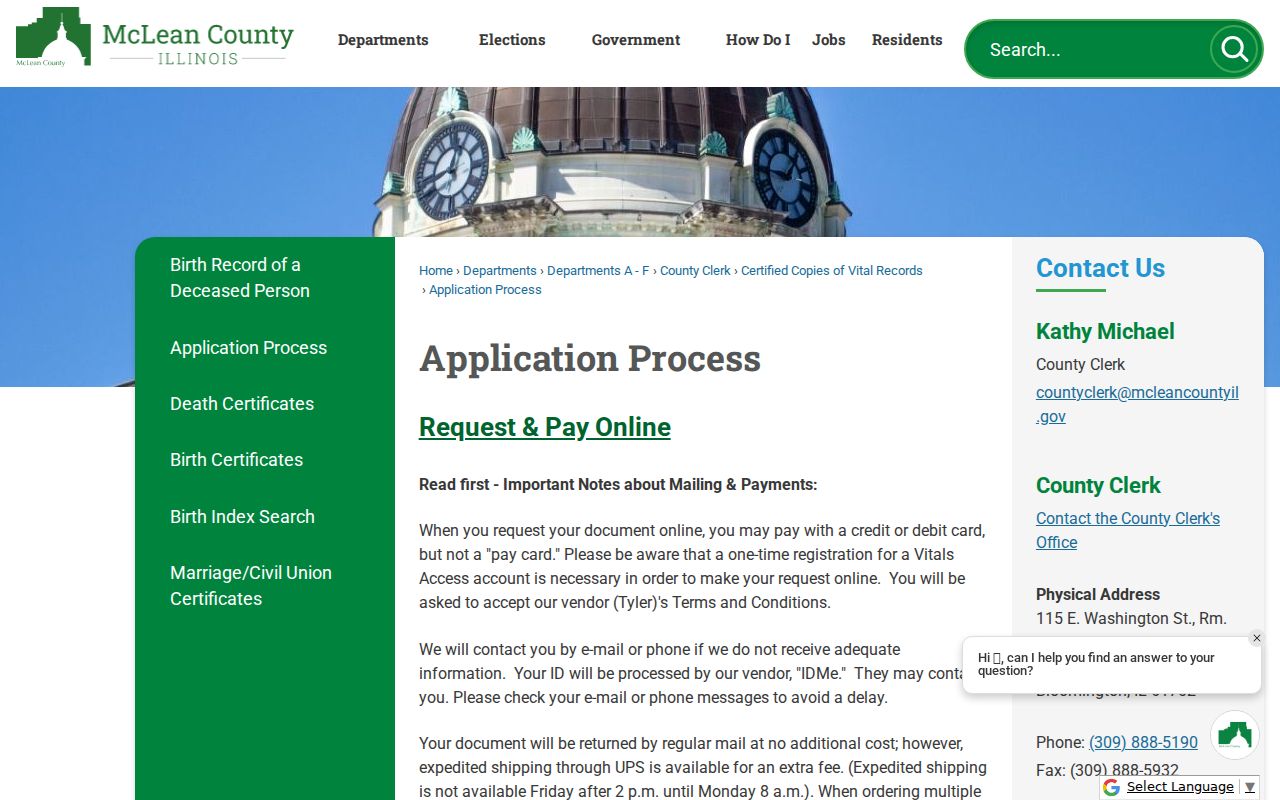
The certificate comes from the custodian; a directory mention or index entry is not a certified vital record.
Historic Normal Residents in Directories
Bloomington-Normal city directories form the main historical residents directory shelf. The McLean County Museum of History links digitized volumes from 1855 through 1920. Bloomington Public Library has near-continuous city directories into the present, plus telephone books and criss-cross volumes arranged by address. Normal Public Library adds HeritageQuest, obituary tools, newspapers, Illinois Digital Archives, and local-history help.
Early entries do not look like modern address cards. The 1855–56 volume may describe a street side, a corner, a place between two streets, an occupation, a spouse, or where someone boarded. Normal was still tied to the name North Bloomington before adopting Normal in 1865. Search both place names and spelling variants, then use old plats to map the wording.
Full collection years, entry abbreviations, and tracing methods appear in the Normal city directory. Newspaper and probate evidence can confirm that two similar names belong to different people.
Normal Archives Fill Online Gaps
The Illinois Regional Archives Depository at ISU's Milner Library keeps McLean local-government records close to Normal. The State Archives holdings search identifies birth, death, marriage, probate, jail, election, coroner, school, zoning, and other series. The physical IRAD site can then retrieve a named accession or volume by appointment.
The McLean probate index contains 15,009 records and documents missing volume ranges plus a ten-month gap in 1896–97. A missing index entry does not prove that the underlying estate file never existed. Copies are requested by mail or phone rather than email. Bring the estate name, accession, volume, page, date span, and case type when possible.
Bloomington Public Library also holds Pantagraph microfilm from 1853 through 2018, a 1968–86 obituary microfiche run, later NewsBank coverage, and local-history research service. The Museum adds directories, archives, photos, and finding aids.
Normal FOIA Reaches Town Files
Town police reports, permits, planning files, engineering records, and other municipal groups are described in Normal's Index of Records. Requests can go through the Normal public-record request portal, by email, by mail, or in person under the Town's published process. Illinois FOIA, 5 ILCS 140, generally gives a public body five business days to respond, subject to a statutory extension, exemptions, redaction, and fee rules.
The 2025 Town annual report counted 1,895 FOIA requests and set out a 2026 plan for records review, disposal authority, searchable digitization, and dashboards. Those projects may shift how a file is found. The Index of Records and Transparency page remain good orientation points.
The Normal request portal capture shows the municipal fallback when no public index exists.
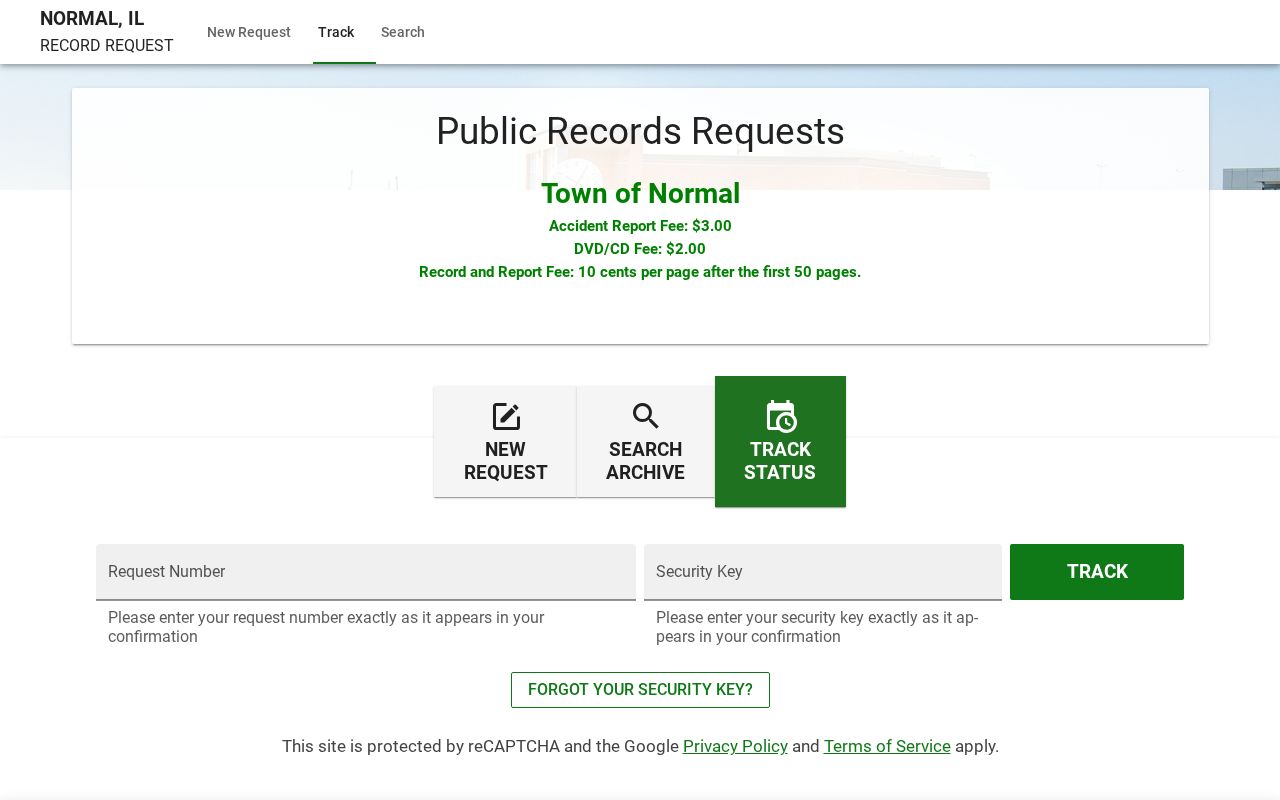
Ask for a record group and date range, not a broad dossier on a person. The custodian decides what can be released.
Protected Normal Resident Information
Public indexes leave out many people and details. Renters may never appear in a parcel record. Household members are not exposed through utility or motor-vehicle data. Sealed court material, juvenile records, current vital certificates, and protected voter information have separate limits. A blank search result can mean restricted access, a spelling mismatch, a different jurisdiction, or no event in that record system.
The Illinois Attorney General Address Confidentiality Program supplies a substitute address to qualifying survivors. It can protect voter and agency interactions, but it cannot promise that every property record will disappear. Corrections belong with the office that created the record. FOIA denials can be reviewed through the Attorney General's Public Access Counselor.
Correcting a Normal Name Match
Normal records use several naming systems, and a close match is not always the same person. Nineteenth-century directories shorten first names and use terms such as “res,” “bds,” “bet,” and “cor.” Recorder data before 2005 can need alternate spellings or parcel numbers. The county court screens may omit a middle name. Property results identify an assessed owner, while a voter match depends on a supplied birth date, ZIP, and street sequence.
Write down the exact source, year, name form, address, and record identifier before comparing results. A parcel number should lead to the same legal description in tax, GIS, and deed sources. A court result should be checked by case number and disposition. An old directory name becomes stronger when the occupation, spouse, street, newspaper notice, or probate entry also agrees. Avoid merging two people merely because a common name and town match.
Send a correction to the office that owns the record. The assessor handles parcel-roll issues, the Recording Division controls its index and document images, the Circuit Clerk controls court files, and a library can explain an index transcription. Include the minimum facts needed to identify the item. Do not copy a full date of birth or protected address into a public message when a case, parcel, document, or certificate number will do.
Note: A verified identifier is more reliable than a name alone, especially when Normal and Bloomington records overlap.