
Walk a Normal Street
A sound by-address search separates ownership from occupancy. McLean County tax records identify the name billed for a parcel, while the deed confirms legal title. The Town of Normal map supplies parcel shape and links. A voter check can confirm a known person at an address, but it is not a public list of everyone on the block. Historical directories then add older occupants for the years they were published.
- Enter the house-number range, street name, and Normal in the McLean Property Tax Inquiry. Save the parcel number, situs line, mailing line, and tax year.
- Open the matching polygon in the Town parcel layer. Check the address, PIN, and direct links to assessor, recorder, and tax information.
- If a person's name is already known, use the Illinois voter lookup with name, birth date, ZIP, and street details. Do not treat it as a street-wide roll.
- Search the Recording Division by owner name and date. Read the recorded image when available, since an index is only a finding aid.
- For an older household, move to the Cole reverse directories and older Bloomington-Normal volumes held by the library.
This chain gives a by-street search a clear order: address, parcel, title, individual confirmation, then historical evidence. Keep a note of each source date. Current tax data, a deed date, voter status, and a printed directory year do not describe the same moment.
Begin narrowly. A complete house number is better than a street name alone, but a number range helps when the exact parcel is uncertain. If a road crosses the town line, keep Normal in the city field and compare the taxing-district stack. Normal Township, Town of Normal, school, library, water, airport, and special-district boundaries do not all follow one line. Those district names can explain why two nearby parcels lead to different custodians without proving who lives on either one.
Normal Street Search Fields
Devnet supports more than a simple owner search. Its address range can browse part of a Normal street, while sale, district, class, and legal-description fields help separate similar parcels. No field is required on the inspected parcel form, so a broad search can be narrowed in stages.
| Portal field | Input | Best street use |
|---|---|---|
| House Number Low / High | Number range | Browse a block or selected span |
| Street Name | Name only | Find parcels along one named street |
| City | Text | Use Normal to reduce same-name streets elsewhere |
| Owner Name | Tax-bill name | Return to an address from a known owner |
| Parcel Number | County PIN | Reopen the exact parcel |
| Sale Date / Price | Ranges | Separate transfers on a long street |
| Tax District / Class | Multi-select | Distinguish public, residential, or other parcel groups |
| Legal Description | Subdivision or lot text | Bridge a renamed address to its land record |
The live assessor screen shown here displays these parcel and address controls. The Mobile Home tab has its own number, owner, house number, street, and city inputs, so it should be checked when the ordinary parcel tab is not the right record class.
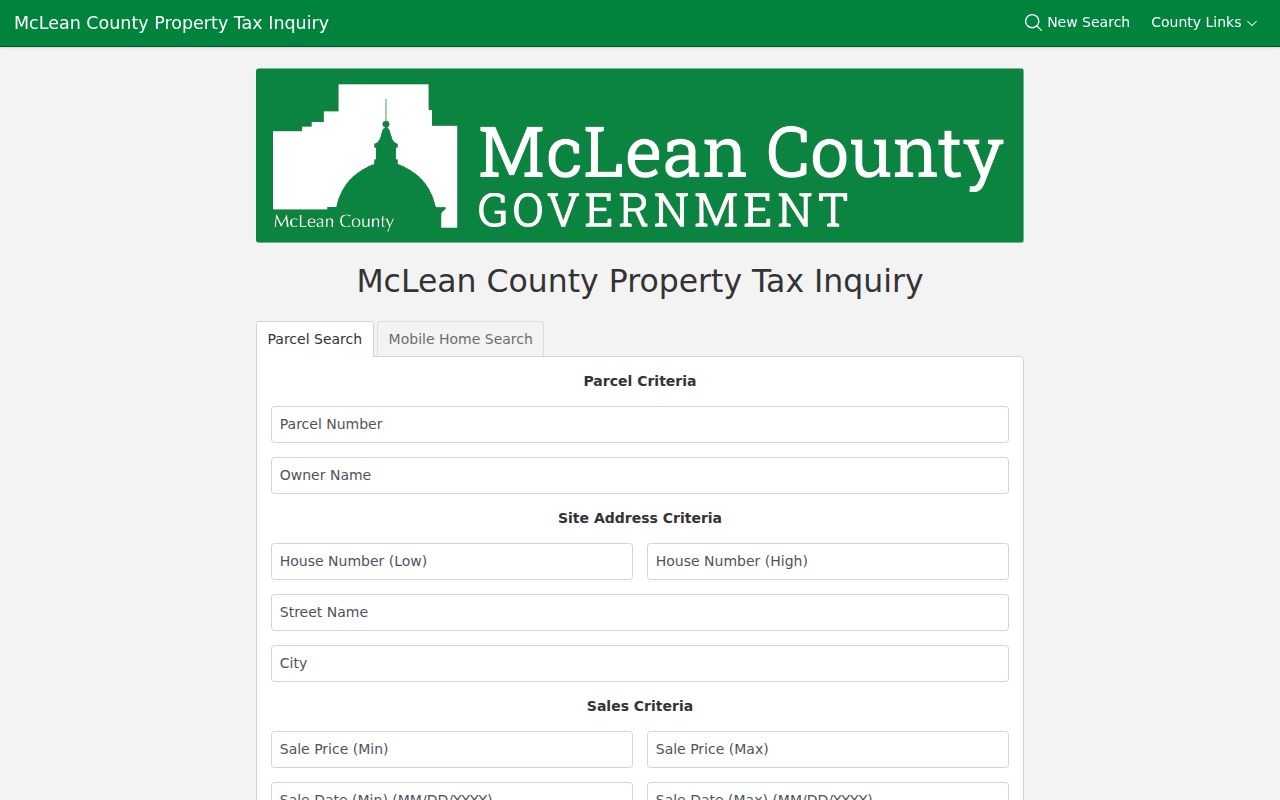
The screen makes a number range practical, yet the result still names the tax-roll owner rather than every occupant. Date-stamp any result because the portal shows current data and no historical online cutoff was stated.
Normal Records Organized by Address
Several Normal records accept an address, but each has a different keeper and evidentiary value. The parcel number is the best bridge when street spelling, mailing city, or house number causes doubt.
| Address source | Keeper | Street evidence | Access channel |
|---|---|---|---|
| Property and tax roll | McLean County | Owner, mailing and situs addresses, PIN, values, taxing bodies | Devnet online; Assessor or Treasurer by phone/counter |
| Parcel geometry | Town of Normal and McGIS | Polygon, address, PIN, linked county records | REST layer, GIS hub, or staff |
| Deeds and plats | County Clerk Recording Division | Legal title, lot, subdivision, easement, annexation | RecordHub/eSearch, counter, or mail |
| Voter confirmation | McLean County Clerk and Illinois | Match for a supplied voter and address | Individual state lookup; restricted file request |
| Permits and code records | Town of Normal | Work, inspection, zoning, and case details by address | eTRAKiT, reports, Index of Records, or FOIA |
| Reverse directories | Bloomington Public Library | Older address-to-subscriber or occupant clues | Physical Cole volumes, 1982-1996/97 |
No single row proves who sleeps at an address today. Cross-check the situs address against the mailing address, then use the deed image for title. A current resident who does not own, vote at, or appear in a released public record may not be named.
The county counter remains part of the address workflow. Assessor questions go to 309-888-5130, Treasurer tax questions to 309-888-5180, and the Recording Division to 309-888-5170. Recording staff can help locate the right index route, though they do not perform legal searches or give legal advice.
Normal Street Record Terms
Address systems use short terms that change what a result means. Reading them correctly prevents a parcel owner from being mislabeled as a resident.
- Parcel or PIN
- The county's identifier for a tract of land. It is more stable than a street label.
- Situs address
- The physical property address, which can differ from the owner's mailing address.
- Plat
- A recorded map that lays out lots, blocks, streets, easements, or a subdivision.
- Criss-cross directory
- A directory arranged by address or telephone number, allowing a reverse search from place to listed name.
On a Normal street, retain both the parcel number and legal description. They let the Recording Division or planning staff locate a tract when an old directory uses a corner, a block description, or a former place name.
Normal Parcels on the Town Map
The Town of Normal parcel service exposes address, owner-name, PIN, geometry, and links to Assessor, Recorder, and Tax Info. It can turn one address into a street-by-street map of adjacent polygons. McGIS adds broader county layers for zoning, flood, district, and open-data context, but the display is not a legal survey.
The Normal GIS parcel layer shown below documents the available parcel fields and query controls.
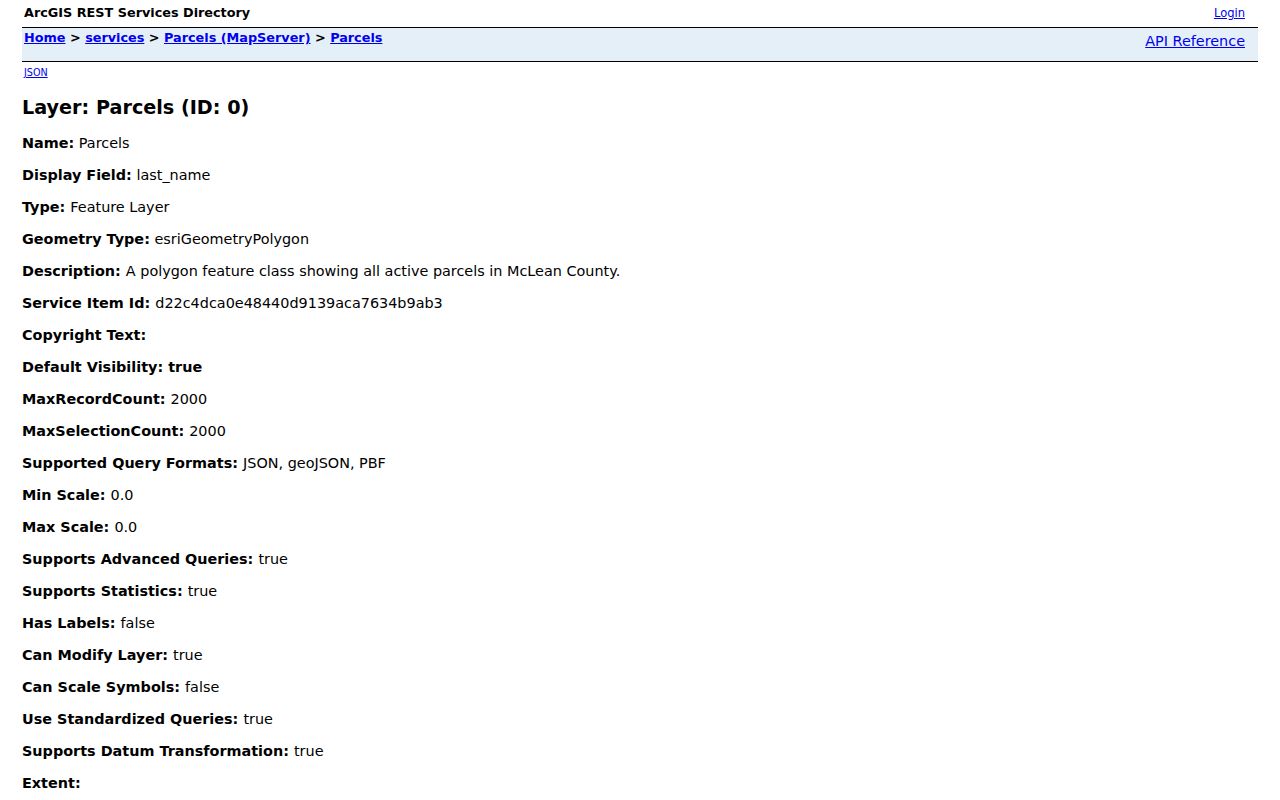
Use the polygon to select nearby parcels, then open each linked record separately. The layer has a 2,000-record limit and a parcel-year field, so a long street search should be split into blocks and labeled with the map's date.
A good check compares the map address with Devnet and the recorded plat. When they differ, preserve the PIN and ask Planning, McGIS, or the Recording Division. Do not alter a historic address by guesswork.
Two Addresses in Normal Tax Records
Devnet displays an owner's mailing address apart from the parcel's situs address. That split is a useful local clue. It may show that a bill goes to another place, but it does not identify who occupies the parcel. The inspected tax bill also showed the PIN, legal description, township, property use, taxing bodies, values, exemptions, rate, and installment fields.
The sample McLean tax inquiry shown here demonstrates how the two address lines and parcel details appear together.
The sample is a tax inquiry, not proof of payment, occupancy, or legal vesting. Its owner name is intentionally not repeated. Follow the recorder link before making any claim about title.
Deeds Along a Normal Street
The McLean County Clerk's Recording Division holds deeds, mortgages, plats, easements, annexations, liens, and other instruments back to 1831. Online official records currently begin in 1973, while older books and images are moving into RecordHub. Recording duties shifted from the Recorder to the County Clerk at the end of 2013, so both office names matter in a historical search.
The older Cott account requires a signed, notarized agreement by mail or an in-person application with photo identification. It is inquiry-only and bars bulk or automated harvesting. Individual access lasts 30 days and may be renewed. A counter or mail request remains important for older material, unclear scans, and users without an activated account.
The McLean deed-index account page shown below explains the registration gate.
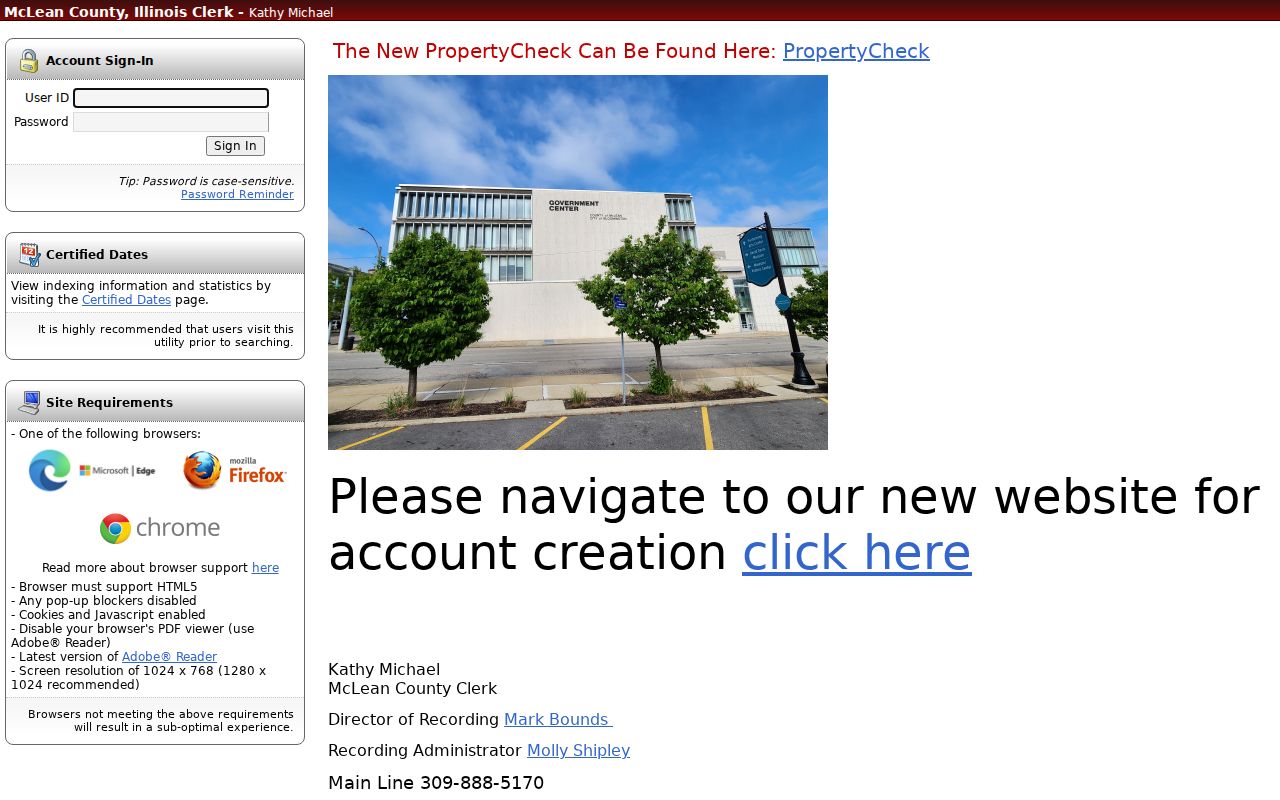
Pre-2005 indexing can have spelling and PIN problems. Records recovered from microfilm for roughly 1971 through 2003 may carry an RDX marker and be less complete, so try name variants and inspect the image.
Normal Permits by Street
Town permit, inspection, planning, engineering, and code records add the story of work at an address. eTRAKiT has a login-gated path, monthly permit reports provide another route, and the Town Index of Records identifies departmental record groups. When the portal does not answer the question, submit a narrow request through the Normal FOIA process.
State the street number, date range, and desired record types. Ask for non-exempt permits, inspection approvals, zoning or land-use records, code-case numbers, and final dispositions. Plans or images may have a different custodian, and protected portions may be withheld. A whole-street request works best with a number range or PIN list built from GIS.
Note: A focused parcel list helps the Town locate records and avoids a vague request for everything associated with a street.
Normal Streets Before House Numbers
Normal began as North Bloomington near the railroad junction in 1854, gained Jesse Fell's addition in 1857, and adopted the Normal name in 1865. The 1855-56 directory described homes by corners, street sides, and phrases such as “between” two streets. A present house number cannot be pushed back into that system without a plat or block map.
No verified townwide E911 readdressing project or single renumbering year was found. For a suspected change, request the original subdivision plat, annexation or ordinance, planning map, and GIS history. The PIN and legal description form the stable bridge. Architecture can help too: Cedar Crest, Highland, and Old North Normal have official historic-district maps and dated building context.
For the historic shelf itself, use the Normal city directory collections. The modern address workflow should hand the old wording to those volumes instead of treating it as a current address.
Limits of Normal Street Directories
A public address search can show a tax owner, title party, permit applicant, or a match for a voter already supplied. It does not expose a complete household roster. Renters, unlisted subscribers, utility customers, protected victims, Address Confidentiality Program participants, and people absent from the selected record may remain unseen. Mailing and situs addresses can also differ.
Normal falls under the McLean County Clerk's election authority, while Bloomington has a separate election commission. Illinois voter lookup is an individual check requiring personal details, not a way to browse everyone by street. The full voter file has statutory release and misuse limits.
Lawful use. Use Normal address records for legitimate personal research, genealogy, property inquiry, or civic understanding. Never use them to stalk, harass, intimidate, or harm anyone.
The best conclusion states exactly what the record says: “tax-roll owner,” “deed grantee,” “listed subscriber,” or “matched registered voter.” “Resident” requires support from a source tied to occupancy and date.