
Where Normal Previous Residents Appear by Era
An address trail changes with the period being searched. Current Normal parcels begin in the tax roll and GIS, but earlier households are more likely to surface in the Bloomington-Normal directory shelf, census schedules, plats, newspapers, or probate material. The table separates each source's useful span from what it can actually prove.
| Source | Local years covered | Where held | Evidence supplied |
|---|---|---|---|
| County recorded documents | Back to 1831; official online index reported 1973 through July 30, 2026 | McLean County Recording Division, RecordHub, counter and books | Grantor, grantee, date, legal tract, instrument and image when available |
| Bloomington city directories | 1855 to present, nearly complete; scans through 1920 | Bloomington Public Library and Museum online collection | Name, address, trade, household and lodging clues |
| Cole criss-cross directories | 1982 through 1996/97 | Bloomington Public Library | Reverse address-to-occupant entries |
| Federal and Illinois census | Federal McLean 1820 through 1930 except 1890; state 1855 and 1865 | Library, federal and licensed collections | Household on one enumeration date |
| Newspapers and obituaries | Pantagraph microfilm 1853 through 2018; other runs vary | Bloomington and Normal public libraries | Moves, deaths, relatives, sales and community events |
| Plats and atlases | Atlases for 1856, 1866, 1874, 1895 and 1914; plat books from 1938 onward with gaps | Bloomington Public Library | Lot, subdivision, street and rural land continuity |
Start with the newest reliable parcel fact, then step into the source nearest the target year. A deed identifies title, while a directory or census may identify past residents who never owned the property. Record the source date beside every name so that a household clue is not made to cover decades it never observed.
Normal Address History Across the RecordHub Change
The McLean County Recording Division says recorded documents reach back to 1831. Its certified-date page reported the official online index from 1973 through July 30, 2026 when inspected. A reconstructed microfilm project added more than 100,000 records from about 1971 through 2003, marked RDX, but those entries may have thinner indexing.
The county was moving from the older Cott eSearch route to RecordHub in August 2026 while historical books, indexes, and images loaded. Search both “Recorder” and “County Clerk Recording Division” in older references because recording duties moved to the clerk at the end of 2013. When an online name search fails, use spelling variants, inspect index books, and ask the counter about the correct book or film.
The certified coverage page shows the live cutoff used for a Normal deed search.
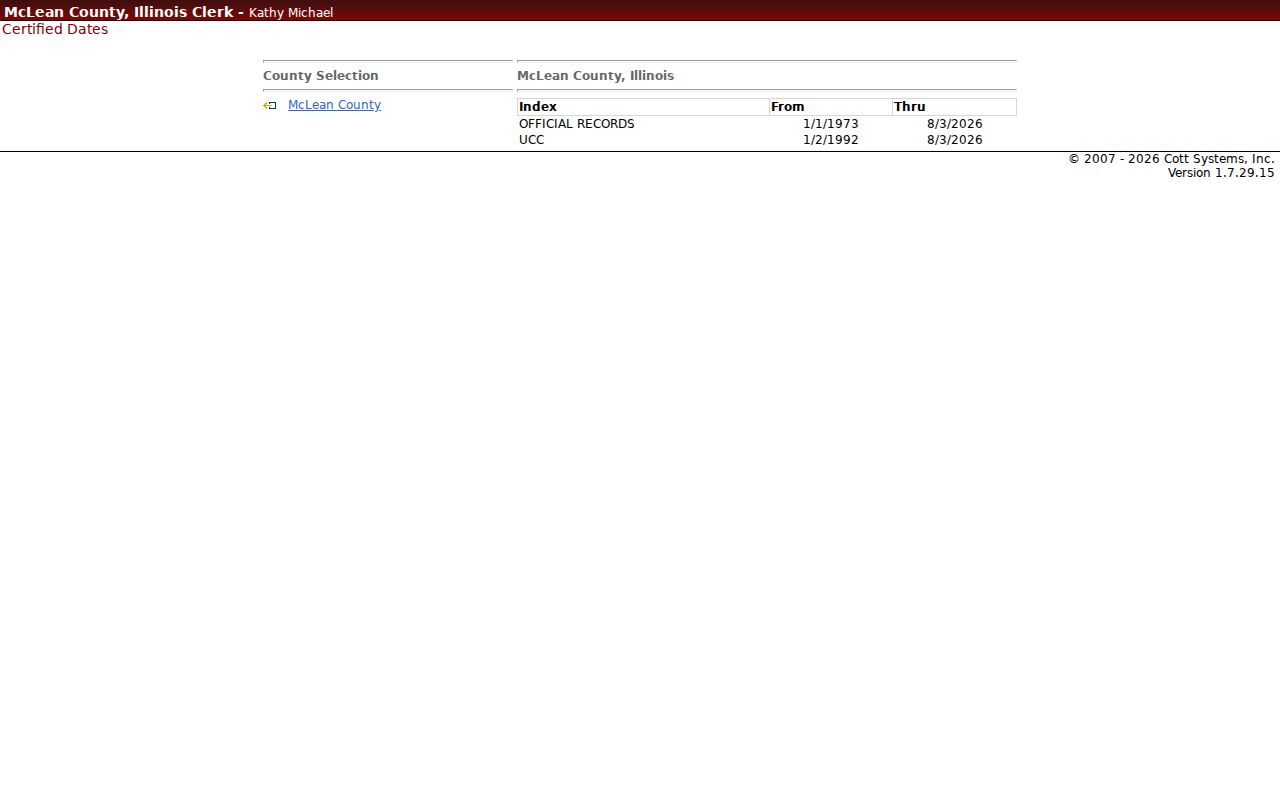
The screen should be date-stamped because its ending date changes as new instruments are certified.
Walk Normal's McLean County Deed Chain Backward
A deed chain starts with the current parcel, not with a guessed surname. Devnet supplies the PIN, situs and legal description. The GIS polygon checks that those facts point to the intended land. The recorded instrument then names the legal parties. Following each seller backward as an earlier buyer creates a documented title sequence for the Normal address.
- Search the current situs in Devnet. Save its PIN, subdivision or lot, owner, tax year, legal description, and any displayed sale date.
- Open the Town GIS parcel. Confirm that the polygon, formatted PIN and situs agree, then follow the recorder link.
- Find the current owner's purchase deed as grantee. Compare the legal description and image rather than choosing the first same-name result.
- Read the grantor's name, then search that person as an earlier grantee within a prior date span. Repeat this link for each conveyance.
- At the web cutoff or a weak RDX entry, move to Online Index Books, the Recording Division counter, deed books, microfilm, IRAD, plats and atlases.
- Grantor and grantee
- The grantor transfers an interest; the grantee receives it.
- Chain of title
- The linked sequence of recorded transfers for the same land.
- Legal description
- The lot, block, subdivision or tract language that stays useful when a street label changes.
When a Normal Previous Residents Search Leaves the Web
The online index is only one access channel. The Recording Division is at 115 E Washington Street, Room M104, Bloomington, and accepts counter and mail work. Staff can point to records but do not conduct legal searches. The older eSearch account required a signed, notarized agreement before activation and prohibited bulk or automated harvesting. RecordHub and Online Index Books became the transition route in 2026.
A useful counter or mail inquiry names the parties, gives a date range, and includes the PIN or legal tract when known. The older account was inquiry-only, with individual access lasting 30 days before renewal. The county warned that pre-2005 entries may have spelling, completeness and PIN issues, so an empty result is a reason to widen the search, not proof that no instrument was recorded.
The Recording Division overview explains the office and its historical records.
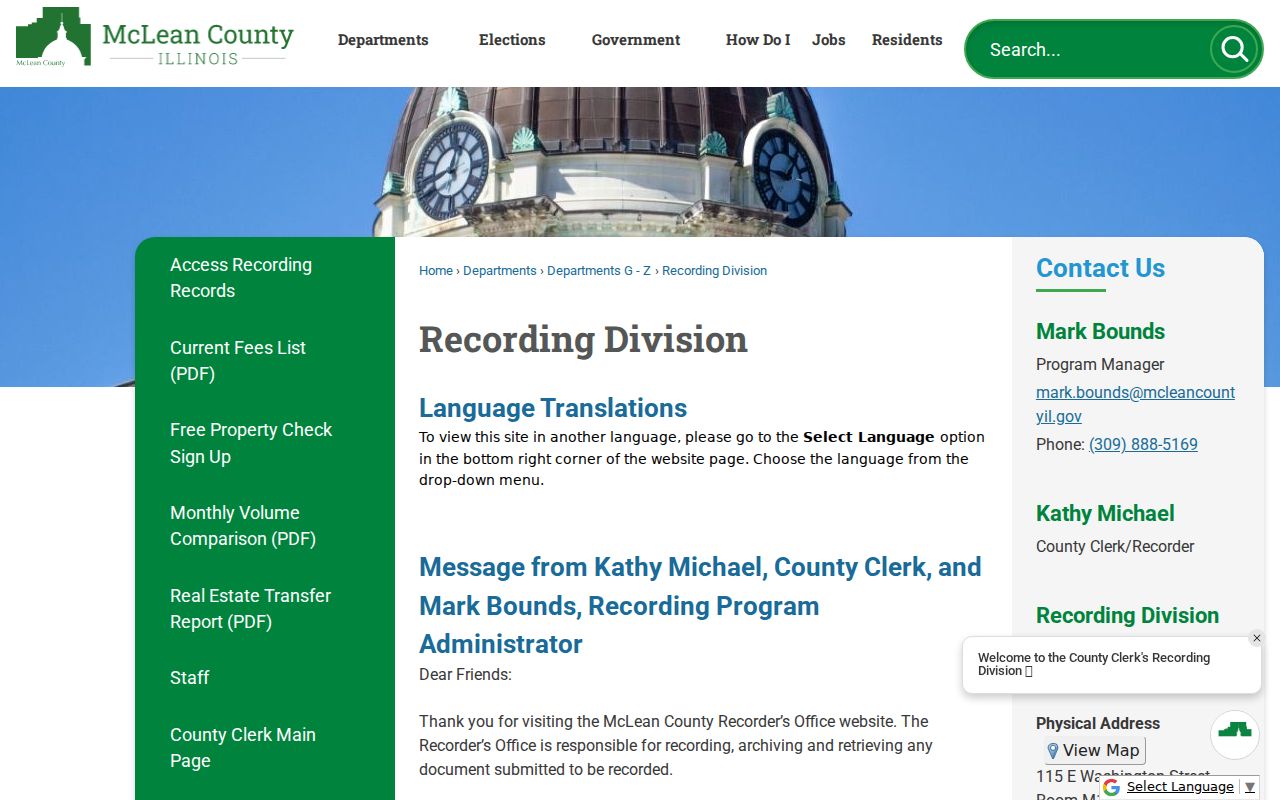
This office route matters when spelling, PIN, or pre-2005 index gaps make a screen result uncertain.
For older government volumes, IRAD at Illinois State University is another fallback. Its catalog identifies record series and date spans; the Milner route is appointment-only, and copies from the probate index are requested by mail or phone rather than by email.
North Bloomington Clues in a Normal Address
Old wording can hide previous residents even when the family never moved. Normal began as North Bloomington at the railroad junction in 1854, Jesse Fell's addition followed in 1857, and the town adopted Normal in 1865. Early directory entries may describe a corner, a side of a street, or the space between two crossings rather than give a modern number.
No verified single citywide renumbering year appeared in the official research. The safe bridge is the original plat, subdivision, lot, PIN, alley or corner wording, and the parcel polygon. This geographic method preserves uncertainty instead of forcing an old description onto a convenient modern address.
The oldest directory language also carries social clues that need careful labels. “Boards with his father” describes a stated lodging relationship, while “res” marks residence and “cor” marks a corner. None establishes ownership. Copy the printed phrase, check the scanned page when OCR looks odd, and then test the location against a plat or deed from the same period.
Note: A matching street name alone does not prove that a nineteenth-century entry occupied today's parcel.
Build a Normal House File at the Regional Library Shelf
There is no single branded Normal house-history guide in the reviewed sources. The Bloomington Public Library local-history collection serves that purpose with directories, Cole reverse volumes, plat books, atlases, newspapers, obituary sources, microfilm and a research request form. A focused request should include the PIN, legal description, former names and an estimated time span.
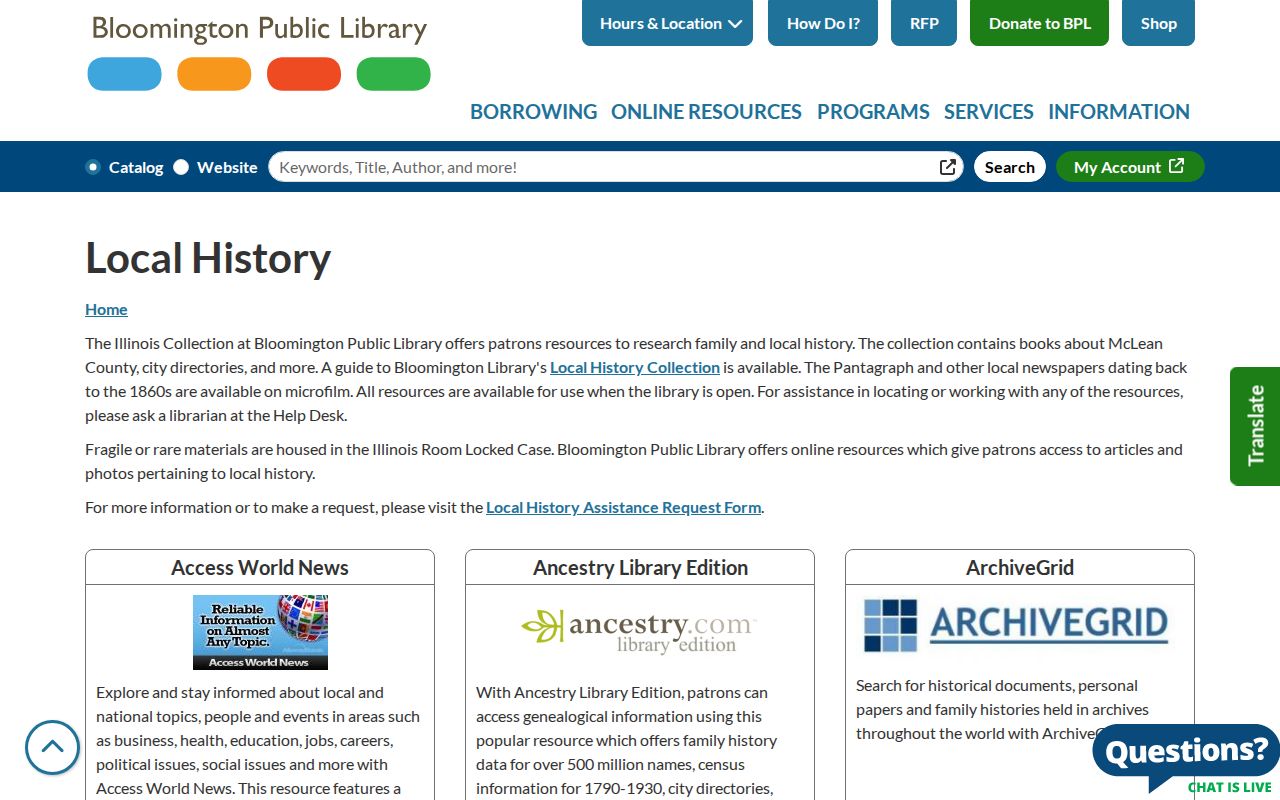
The collection helps connect the title trail to people who occupied, boarded at, or used the address.
Normal Public Library adds HeritageHub, HeritageQuest, Illinois archives and local newspapers. The McLean County Museum's research library offers finding aids, archives and specialist requests, while its digitized directories cover 1855 through 1920. These are complementary access routes, not duplicates of the deed index.
Date Changes to a Normal Property
Maps and permits can explain why a household trail changes. Bloomington Public Library lists atlases for 1856, 1866, 1874, 1895 and 1914, plus plat books for 1938, 1947 and 1951 to the present. Normal permit and planning material may identify construction, zoning, code or land-use activity, although eTRAKiT is login-gated. A narrow FOIA request can ask for non-exempt permit records for one address and date span.
Sanborn fire-insurance maps may help for a specific Bloomington-Normal block, but the reviewed official sources did not verify a Normal year list. Check the Library of Congress or library map holdings by exact block and year before claiming a building appears. Utility customer names are not a public substitute.
Pair Normal Directories, Census and Obituaries
Owners are only half of an address history. The regional city directory collection can show an address, trade, spouse, boarding relation or business, while census schedules capture a household on one date. The full collection runs are covered on the Normal city directory page; here, they work as timed occupancy layers beside the deeds.
- Begin with a deed owner and a target year. Search that surname, then the street or old block wording in the nearest directory.
- Copy the entry exactly, including spouse, occupation, boarding phrase, direction and side-of-street clue.
- Compare it with the nearest available federal or Illinois census. Keep each census tied to its enumeration date.
- Move in five- or ten-year steps and note every appearance, absence, changed trade or altered household phrase.
- Use newspapers, obituaries, cemetery works and probate to explain a death, move, inheritance or family link.
The McLean probate index reports 15,009 records and has documented volume gaps, including a ten-month gap in 1896-97. Its result gives estate name, volume and page, date span and case type. An obituary can suggest relatives or a later town, but probate and vital records should confirm the relationship.
Newspaper access also changes by year. The Pantagraph is on library microfilm from 1853 through 2018, Newspapers.com coverage is listed for 1857 through 1928, and NewsBank begins in 1989. An obituary microfiche run covers 1968 through 1986, while the card index was being digitized and could not be used during review. HeritageHub at Normal Public Library can help with current and recent notices. Search by date and surname first, then test any address or family statement against the more formal record.
Lawful use. Trace Normal previous residents for house history, genealogy and personal curiosity. Never use an address trail to watch, harass, intimidate or harm a living person.